When I first started working with machine learning frameworks like TensorFlow and PyTorch, the bottleneck was obvious: training a moderately complex model could take days. The hardware just couldn’t keep up. Back then, we were lucky if a single GPU completed an epoch in under two hours. Fast forward to now, and the conversation has shifted dramatically — not just about how fast we can train models, but how efficiently we can deploy them across diverse environments. That’s where real AI computing solutions come into play. It’s no longer enough to slap together a cluster of data center GPUs and call it a day. True performance means balancing compute density, memory bandwidth, software compatibility, and power efficiency — especially when scaling from research labs to production-grade cloud AI services.
The Hidden Cost of Specialization
There’s a common misconception that throwing more AI accelerators at a problem will solve everything. In practice, over-reliance on one type of silicon often leads to bottlenecks elsewhere. For example, a system might use high-end GPUs optimized for AI model training, but if the CPU can’t feed data quickly enough, the accelerators sit idle. This is where AMD’s approach to heterogeneous computing stands out. Instead of treating CPUs, GPUs, and adaptive logic as isolated components, they’re designed to work in concert. EPYC processors, for instance, don’t just handle general-purpose compute — they manage I/O, orchestrate workloads, and support massive memory bandwidth, which keeps the entire pipeline moving smoothly.
I remember deploying a recommendation engine on a platform that used older-generation CPUs paired with modern GPUs. Despite having top-tier graphics cards, throughput plateaued because the PCIe lanes were saturated and memory latency was too high. After switching to a server built around newer EPYC processors with increased core counts and expanded memory channels, the same workload saw a 40% improvement — without touching the GPU configuration. That kind of insight doesn’t come from benchmark sheets; it comes from running actual inference jobs under load.
GPUs That Scale Beyond Training
Data center GPUs have evolved beyond their original role in rendering and scientific visualization. Today, they’re central to both training and inference, but the demands of each phase differ significantly. Training requires sustained floating-point performance and large VRAM pools, while inference prioritizes low latency, energy efficiency, and batch flexibility. Some vendors optimize solely for peak teraflops, but that number tells only part of the story.
The Radeon MI300 series reflects a shift toward balanced design. It combines high-bandwidth memory with fine-grained control over power states, allowing operators to tune performance per watt depending on whether they’re running AI model training or serving predictions through AI inference engines. One team I consulted with was using consumer-grade cards for inference in a private cloud setup. They achieved decent accuracy, but the total cost of ownership was unsustainable due to cooling and electricity demands. Migrating to Radeon MI300-based systems cut their operational costs by nearly half while improving response times — a rare win-win in infrastructure upgrades.
What makes this possible isn’t just the GPU architecture itself, but how it integrates with the broader stack. The MI300 leverages chiplet design principles, allowing AMD to mix and match compute dies with I/O dies tailored for data center needs. This modularity supports faster iteration cycles and better yield management, which ultimately translates into more predictable availability — something enterprises care deeply about when planning multi-year deployments.
Software: The Silent Enabler
No matter how advanced the hardware, it’s useless without mature software support. I’ve seen organizations invest heavily in new AI accelerators only to discover that their preferred machine learning frameworks lack optimized kernels or stable drivers. Debugging those gaps eats into development time and delays ROI. This is where ROCm software becomes a deciding factor. Unlike proprietary stacks tied to a single vendor’s ecosystem, ROCm offers an open alternative that supports not only AMD’s own silicon but also encourages community contributions.

Developers working with TensorFlow or PyTorch benefit from ROCm’s growing library of accelerated primitives. Early versions had rough edges — inconsistent documentation, spotty container support, and limited debugging tools. But recent releases have closed most of those gaps. At a recent deployment involving large language models, my team used ROCm-enabled containers on bare-metal servers equipped with AMD Instinct accelerators. We were able to replicate results from CUDA-based setups with minimal code changes, thanks to improved API parity and profiling tools.
And let’s talk about CUDA alternatives. For years, NVIDIA’s dominance meant that many researchers accepted vendor lock-in as inevitable. But reliance on a single software-hardware stack creates long-term risks — supply constraints, pricing volatility, and limited architectural innovation. Organizations exploring CUDA alternatives aren’t necessarily trying to abandon NVIDIA altogether; they’re building resilience. Having access to multiple viable platforms means you can negotiate better terms, avoid single points of failure, and adapt to shifting market conditions.
FPGAs and the Case for Flexibility
Not every AI workload fits neatly onto a GPU. Some benefit from custom logic paths that can be reconfigured on the fly. That’s where Xilinx FPGAs and Adaptive SoCs enter the picture. Originally developed for signal processing and networking, these devices are increasingly used in edge AI and low-latency inference scenarios. Their strength lies in programmability — you can tailor the hardware fabric to match the exact requirements of your algorithm, down to individual bit widths and pipeline stages.
I worked on a computer vision project where real-time object detection needed to happen within strict timing budgets — less than 15 milliseconds end-to-end. Using standard GPUs introduced unpredictable jitter due to driver overhead and context switching. By offloading key stages to a Xilinx FPGA, we stabilized latency and reduced average processing time by 30%. The trade-off? Longer development cycles and steeper learning curves. Programming FPGAs still requires expertise in HDLs or HLS tools, and debugging is more involved than with conventional code.
Still, the payoff can be substantial. Financial institutions use Adaptive SoCs for risk modeling where microseconds matter. Telecom providers embed them in 5G base stations to accelerate beamforming calculations. These aren’t hypothetical use cases — they’re live systems handling millions of transactions daily. The ability to update firmware in the field also means you can patch algorithms or respond to new threats without replacing hardware.
Cloud Providers Are Taking Notice
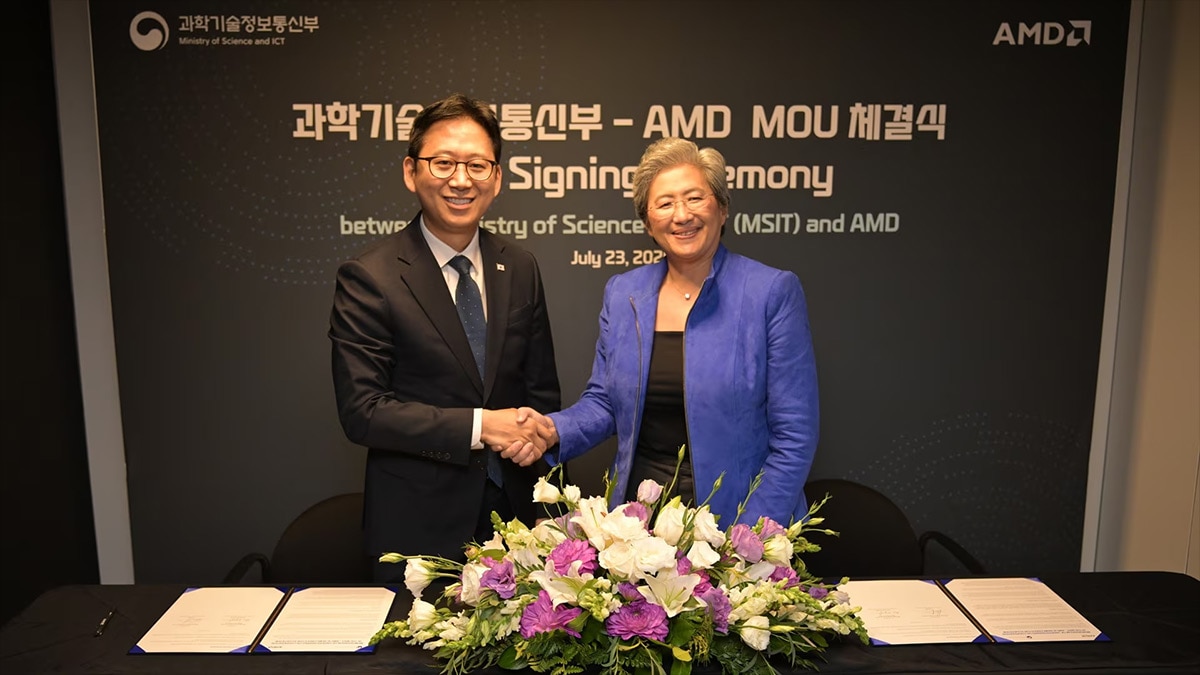
It’s one thing for enterprises to adopt new architectures internally, but widespread adoption depends on cloud availability. The major hyperscalers — Microsoft Azure, Google Cloud Platform, and Amazon Web Services — now offer instances powered by AMD-based AI accelerators. This signals confidence in both performance and longevity. When AWS launches a new instance family featuring EPYC processors and Radeon MI300X GPUs, it’s not just adding another option; it’s validating a full-stack alternative to the dominant player in the space.
From a developer standpoint, this means greater choice. You can benchmark workloads across different architectures without committing to capital expenditure. Need to run a burst of AI model training jobs? Spin up a cluster on Azure with AMD Instinct MI250s and compare against NVIDIA-backed instances. Want to test inference performance under variable loads? GCP offers customizable VMs with access to various accelerators, including those based on AMD silicon.
But there’s a nuance here: cloud AI services abstract much of the underlying complexity, which is great for agility but dangerous if you ignore the details. Instance types may claim similar specs, but differences in interconnect speed, memory layout, or driver optimization can lead to significant performance divergence. Always test with representative workloads — synthetic benchmarks rarely capture the quirks of real-world data pipelines.
Beyond Hardware Specs: The Full Stack View
Let’s say you’re evaluating platforms for a new AI initiative. You’ll likely start by comparing raw numbers — teraflops, VRAM size, tensor cores, clock speeds. Those metrics matter, but they’re starting points, not decision endpoints. What really determines success is how well all layers interact: from firmware and drivers, through runtime libraries, up to framework integration.
Take high-performance computing environments, where mixed-precision math and distributed training are routine. A system might advertise excellent FP16 performance, but if its communication fabric can’t keep nodes synchronized during gradient exchanges, scalability suffers. Infinity Fabric, AMD’s coherent interconnect technology, helps mitigate this by enabling tight coupling between CPU and GPU memory spaces. This reduces the need for redundant data copies and simplifies memory management in distributed setups.
Another consideration is ecosystem maturity. How easy is it to find pre-built containers? Are there reference implementations for common models? Does the vendor actively contribute upstream to projects like PyTorch or TensorFlow? These factors influence time-to-value more than any spec sheet ever will.
Real Trade-offs in Production Systems
Every architecture involves compromises. Here are a few I’ve encountered:
- Higher core count CPUs improve parallelism but increase licensing costs for software priced per socket or core.
- Large VRAM buffers allow bigger models to fit on-device, but they also raise thermal output and require more robust cooling.
- Open software stacks like ROCm offer transparency and customization, but may lag behind proprietary equivalents in early feature rollout.
- FPGAs deliver unmatched efficiency for fixed algorithms, but lose their advantage when models change frequently.
- Cloud instances provide flexibility, but egress fees and instance volatility can complicate long-running workflows.
None of these are dealbreakers, but they demand attention. Ignoring them leads to inflated budgets, missed deadlines, or underutilized hardware. The best outcomes come from cross-functional teams — engineers, data scientists, and operations staff — aligning on realistic expectations early.
The Road Ahead for Enterprise AI
Looking forward, the trend is clear: AI won’t remain confined to specialized clusters. It’s becoming embedded in everything — databases, storage controllers, network switches. That decentralization favors adaptable, power-efficient compute rather than brute-force performance. This plays directly into AMD’s strengths in adaptive computing and low-power design.
We’re also seeing convergence between traditional high-performance computing and AI workloads. Scientific simulations once ran exclusively on CPU-based supercomputers. Now, researchers augment them with neural surrogates trained to approximate physical models — a hybrid approach that slashes computation time. These workloads thrive on platforms that support both precision math and GPU acceleration, making EPYC-powered systems with integrated Radeon accelerators particularly compelling.
Ultimately, choosing the right path isn’t about chasing the highest benchmark score. It’s about matching technology to workload, team capability, and business goals. Whether you’re building internal inference platforms or leveraging cloud AI services, the foundation must be flexible, efficient, and sustainable.
Organizations that treat AI computing solutions as mere hardware purchases will hit walls quickly. Those who view them as integrated systems — combining processors, accelerators, software, and operational practices — are the ones who scale effectively. And as the line between training and inference blurs, and as models grow larger and more dynamic, that holistic perspective will separate functional deployments from transformative ones.